WebinarGeek vs Zoom
WebinarGeek is made for webinars, not meetings. You get more control over the experience, and it’s easier to manage while you’re live.
Over 5,000 companies in more than 55 countries trust WebinarGeek















Why are teams switching to WebinarGeek?

Keep branding consistent across every webinar

Host successful webinars with AI and learn what works

Run repeatable webinars without redoing everything

Get the best-rated support in the industry
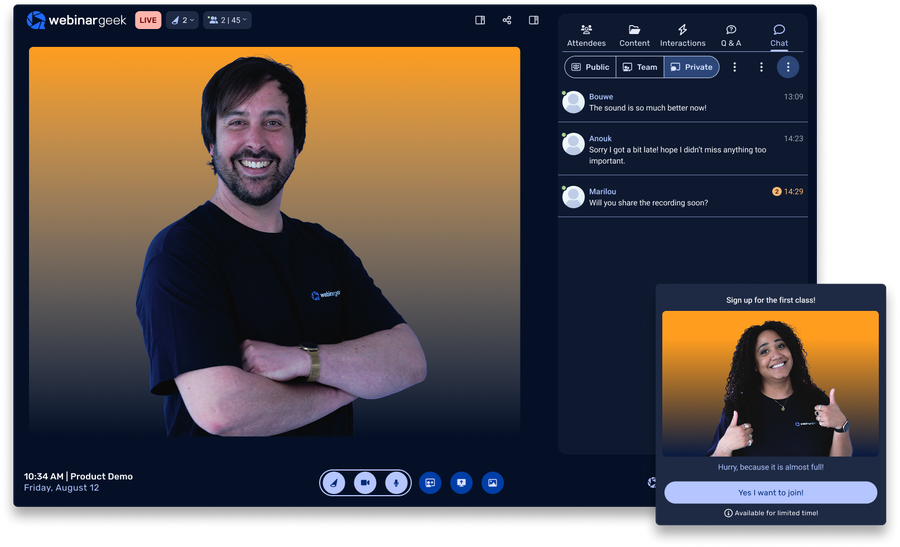
From setup to live, without the hassle
Zoom can be powerful. But that power often comes with tradeoffs: lots of settings, a backend that can feel confusing, and pricing that climbs fast once you go beyond small webinars.
WebinarGeek puts webinars first. You get an easy setup, smooth live hosting, and full control over your branding, plus the features that matter day to day.
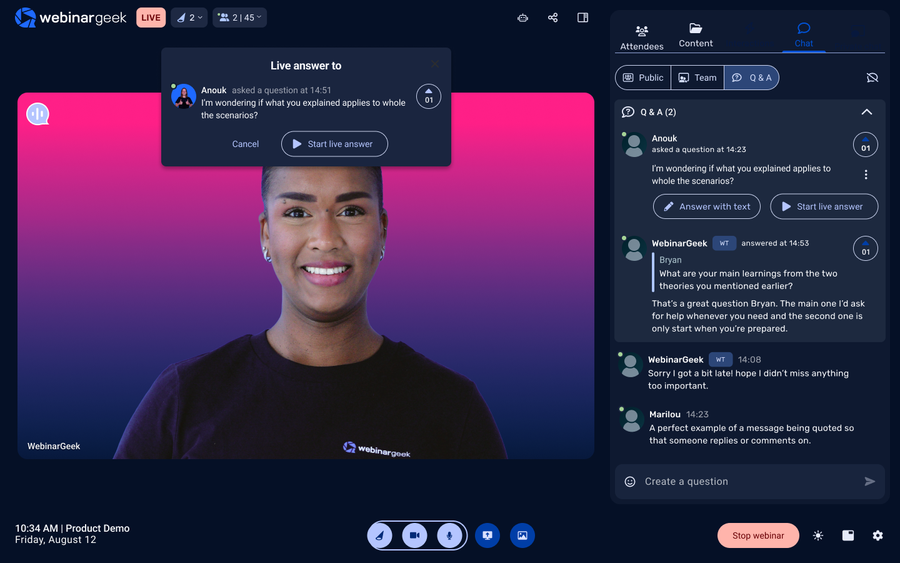
Here's a quick summary of how we differentiate from Zoom:
More control over the webinar experience (your branding and the settings behind the scenes)
A smoother and reliable viewing experience with fewer connection hiccups
Top-rated support for questions and hands-on guidance
Clear pricing that scales predictably as your audience and registrations grow
Ready for the specifics? See how WebinarGeek compares to Zoom below.
View nowSee what users are saying
Don’t just take our word for it, see what our users say about WebinarGeek.
Sounds great but I have some doubts...
Totally fair. Here are the questions we hear most from people comparing WebinarGeek and Zoom.


WebinarGeek is the best alternative for Zoom
Do you want to know why WebinarGeek is the better webinar platform? Compare Livestorm vs WebinarGeek (2026).

VS
Zoom
Zoom
General options
Advanced options
Tool/interaction
Integration
Support
Last updated: 2026

11,000 Sign-Ups: The Webinar Success of Nies Cools
Nies Cools, a Belgian business coach, turned to webinars to scale her coaching practice without losing the personal touch. What started with 120 sign-ups grew to over 11,000 registrations for a single session.
Read moreFAQ
What is the main difference between Zoom and WebinarGeek?
The main difference is what the platforms are designed for.
Zoom started as a video meeting tool. It works very well for team meetings, internal calls, and online presentations. Zoom Webinars was later added as an extension of the meeting platform.
WebinarGeek is built specifically for webinars. The platform focuses on the full webinar workflow, from creating a registration page and sending confirmation emails to hosting the session in the webinar room and reviewing the statistics afterward.
If webinars are a regular part of your marketing, onboarding, or training, a platform designed specifically for webinars often makes the process easier to manage and repeat.
Is WebinarGeek a good alternative to Zoom for webinars?
Yes, especially if you host webinars regularly.
Zoom is widely used for meetings, but many companies find that running marketing or training webinars requires additional setup.
WebinarGeek focuses entirely on webinars, which means tools like registration pages, automated reminder emails, polls, quizzes, and built-in calls to action are part of the standard workflow.
Is WebinarGeek GDPR compliant?
Yes. WebinarGeek is designed with GDPR compliance in mind and stores data on European servers.
For companies in Europe, this can be an important factor when collecting attendee data through a registration page or sending automated emails related to the webinar.
Which platform is better for marketing webinars?
For marketing webinars, WebinarGeek often provides more built-in tools.
Marketing webinars usually rely on features that help engage the audience and guide them toward the next step. For example:
Polls and quizzes to keep attendees involved
Calls to action during the webinar
Automated follow-up emails after the session
Detailed statistics to measure engagement
These features help turn webinars into a repeatable marketing channel instead of a one-time event.
Is Zoom or WebinarGeek easier to set up?
Teams that focus on webinars often find WebinarGeek easier to manage because the platform guides you through the full webinar process. You can create a webinar, share the registration link, automatically send confirmation and reminder emails, and host the event in the webinar room.
This makes it easier to turn webinars into a consistent process for marketing, onboarding, or training.
What integrations are available with other marketing tools?
WebinarGeek integrates with popular marketing tools like Mailchimp, HubSpot, and Zapier, enabling seamless email marketing and CRM management.
You can also connect with social media platforms like Facebook and LinkedIn for easy promotion. These integrations help streamline your processes, manage contacts, and enhance performance analysis.
For more details on available integrations, visit here.
Which webinar platform is better for small and medium-sized businesses?
For many small and medium-sized businesses, WebinarGeek tends to be the easier option. WebinarGeek uses a simpler pricing structure. The plans are easier to understand, so you can quickly see what you get and what it will cost as your audience grows. That clarity makes planning easier, especially if webinars are part of your ongoing marketing, onboarding, or training.
For teams that want to run webinars regularly without constantly rechecking pricing tiers or feature limits, that simpler setup removes a lot of unnecessary guesswork.
How do I make the switch?
Ready to move over? Start your free trial or talk to us if you're bringing a bigger team or need something custom.